


Which 2026 Silverado 1500 Engine Should You Buy?
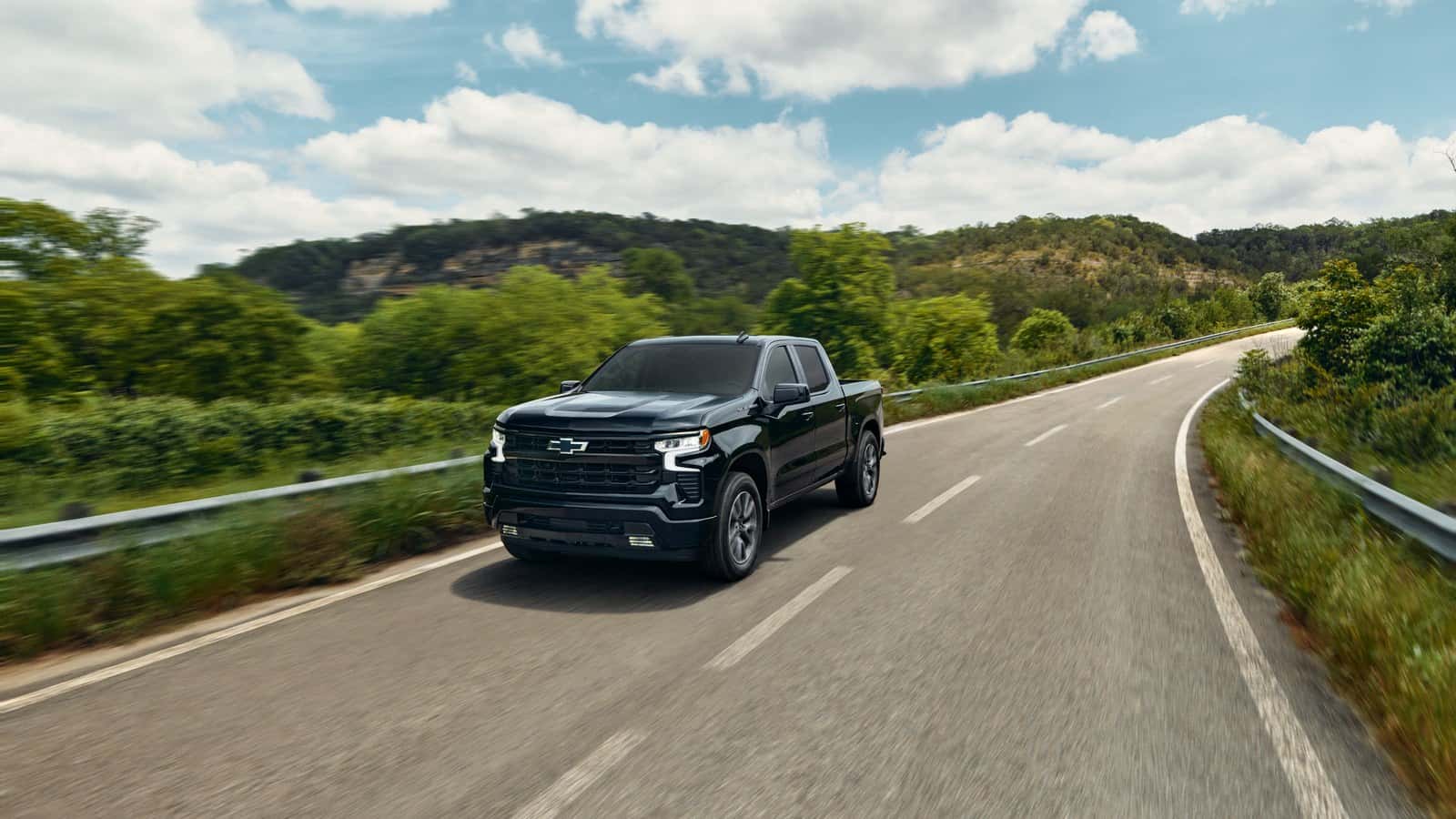
The 2026 Silverado 1500 comes with four engines, and most of what gets written about them compares horsepower. Horsepower is the least useful number on the list. What actually separates these engines is what they cost you to live with over a few years of driving, and on that measure the spread is wider than anybody tells you.
Two numbers frame the whole decision. A Crew Cab 4×4 with the Duramax diesel is rated at 24 mpg combined. The same truck with the 5.3L V8 is rated at 17. And the 6.2L V8, the biggest gas engine Chevrolet puts in this truck, returns the same 17 combined as the 5.3L while making 65 more horsepower.
On This Page
What engines come in the 2026 Silverado 1500?
Four: a 2.7L turbocharged four-cylinder, two V8s, and a turbo-diesel inline-six. Here is what each one makes.
| Engine | Horsepower | Torque |
|---|---|---|
| 2.7L TurboMax | 310 hp | 430 lb-ft |
| 5.3L EcoTec3 V8 | 355 hp | 383 lb-ft |
| 6.2L EcoTec3 V8 | 420 hp | 460 lb-ft |
| Duramax 3.0L Turbo-Diesel | 305 hp | 495 lb-ft |
Read that table twice. The Duramax makes the least horsepower of the four and the most torque by a clear margin. The 2.7L four-cylinder makes more torque than the 5.3L V8. Horsepower sells trucks in advertising; torque is what pulls a loaded trailer away from a stop sign, and the ranking is almost inverted between the two.
Which engine gets the best fuel economy?
The Duramax, by a wide margin, and it is not close. These are EPA ratings for four-wheel-drive configurations, which is what nearly everything on our lot is.
| Engine, 4WD | City | Highway | Combined |
|---|---|---|---|
| Duramax 3.0L diesel | 22 | 26 | 24 |
| 2.7L TurboMax (LT, RST) | 17 | 20 | 18 |
| 5.3L V8 | 16 | 20 | 17 |
| 6.2L V8 | 15 | 20 | 17 |
| 6.2L V8, ZR2 | 14 | 17 | 15 |
Two things jump out. The Duramax returns seven more combined miles per gallon than the 5.3L V8, which is roughly a 30 percent reduction in the fuel you burn. And the Trail Boss trims, which are a big share of what sits on this lot, drop further on mud-terrain tires: a 5.3L Trail Boss on mud-terrains is rated 15/18/16 rather than 16/20/17.
A note on where these numbers come from. Two-wheel-drive versions of these trucks rate higher across the board, and the 2WD Duramax is rated 23/28/25. You will see that 28 quoted in a lot of places. It is a real number, but it belongs to a truck most people around here do not buy.
Does the Duramax diesel pay for itself?
It depends almost entirely on how many highway miles you drive, and the honest answer requires arithmetic most dealership pages skip. Here is the whole calculation with nothing hidden.
At 15,000 miles a year. A 4WD Crew Cab with the 5.3L V8, rated 17 combined, burns about 882 gallons. The same truck with the Duramax, rated 24 combined, burns about 625 gallons. You save roughly 257 gallons a year.
At 25,000 miles a year. The 5.3L burns about 1,471 gallons and the Duramax about 1,042. The saving grows to roughly 429 gallons a year.
The part nobody mentions. Diesel usually costs more per gallon than regular gas. If diesel is running 15 percent higher at the pump, a 30 percent cut in gallons is not a 30 percent cut in your fuel bill. Take today’s local prices for both, multiply, and then compare that annual figure against what the diesel option costs on the window sticker.
That gives you a payback period in years rather than a slogan. If you drive 12,000 easy miles a year, the diesel will probably never pay for itself and you are buying it because you like how it drives. If you run the I-20 corridor every week, or you tow to Vicksburg and back regularly, the math turns much faster.
Fuel is also only part of the picture. Diesel service intervals, diesel exhaust fluid, and resale value all move the answer, and they move it differently for a truck you keep four years than for one you keep ten. Tell us which one you are, and we will run the numbers against the actual truck you are looking at rather than a brochure average.
Is the 2.7L TurboMax enough truck?
For most people, yes, and the four-cylinder badge does it no favors. The 2.7L TurboMax makes 310 horsepower and 430 lb-ft of torque, which is 47 lb-ft more torque than the 5.3L V8. In a two-wheel-drive Crew Cab it is rated to tow 9,300 pounds.
It also returns 18 mpg combined in a 4WD LT or RST against the 5.3L’s 17. So you gain torque and you gain a little fuel economy. What you give up is towing headroom at the top end and the sound of a V8, and for a lot of buyers that second one is not a small thing.
Where the 2.7L runs out of room is heavy, repeated towing. If you are regularly pulling a loaded equipment trailer or a big camper, the gap between that figure and the 11,300 or 13,000 pounds a V8 or diesel Crew Cab 4×4 is rated for starts to matter. Our breakdown of towing by configuration has the full set of numbers, including the payload math that usually bites before the tow rating does.
5.3L or 6.2L: what does the bigger V8 buy you?
More than most people expect, and it costs less in fuel than most people assume. This is the comparison that surprises customers most often.
| Crew Cab 4×4 | 5.3L V8 | 6.2L V8 |
|---|---|---|
| Horsepower | 355 | 420 |
| Torque | 383 lb-ft | 460 lb-ft |
| Max towing | 11,300 lbs | 13,000 lbs |
| EPA combined | 17 | 17 |
| EPA highway | 20 | 20 |
The 6.2L adds 65 horsepower, 77 lb-ft of torque and 1,700 pounds of towing capacity, and the EPA rates it identically to the 5.3L on the highway and in combined driving. The entire fuel penalty shows up as one mile per gallon in the city.
Two honest caveats. EPA ratings are a standardized test, and a 6.2L driven hard will drink more than a 5.3L driven gently, which no rating captures. And the 6.2L is not offered on every trim, so the real question is often whether the trim you want offers it at all. But if you are choosing between two trucks on the lot and the difference is 5.3L against 6.2L, the fuel argument for the smaller V8 is much weaker than it sounds.
Which engines are actually on the lot in Rayville?
As of 17 September we had 37 new 2026 Silverado 1500s in stock, and the engine mix is not what most people would guess. More than half of them are the 6.2L V8.
| Engine | In stock | Share of lot |
|---|---|---|
| 6.2L EcoTec3 V8 | 20 | 54% |
| 2.7L TurboMax | 6 | 16% |
| 5.3L EcoTec3 V8 | 6 | 16% |
| Duramax 3.0L diesel | 5 | 14% |
Three details worth knowing before you shop. Thirty-two of the 37 are four-wheel drive, and 36 of 37 are Crew Cabs, so the 4WD Crew Cab figures throughout this guide are the ones that apply to almost everything you can actually drive home. All five diesels are 4WD, which means the 24 mpg combined rating applies to every Duramax on the lot rather than the higher 2WD number you see quoted elsewhere.
And four of the six 2.7L TurboMax trucks are two-wheel drive, which is exactly the configuration that carries the 9,300-pound tow rating quoted above. If you are looking at a TurboMax and towing matters, check the drivetrain on the window sticker rather than assuming. Inventory turns constantly, so treat this as a snapshot and check the live list for what is here today.
Which engine should you actually buy?
Start with how you use the truck, not with the spec sheet.
| If this is you | Start here |
|---|---|
| Daily driver, occasional light trailer, mostly local miles | 2.7L TurboMax |
| You want a V8 and you tow a boat or a couple of side-by-sides | 5.3L V8 |
| Heavy towing, and you want the power without the diesel premium | 6.2L V8 |
| High annual highway miles, or you tow heavy and often | Duramax 3.0L |
| Serious off-road use is the priority | ZR2, knowing it tows and drinks the worst |
One practical note: engine availability varies by trim and changes as inventory turns. Before you settle on an engine, check what is actually sitting on the lot right now, because the best engine you can drive home this week beats the perfect one that has to be ordered.
Key Takeaways
- The Duramax makes the least horsepower and the most torque of the four engines. Torque is what tows.
- The 2.7L TurboMax makes 47 lb-ft more torque than the 5.3L V8 and returns better fuel economy.
- The 6.2L V8 is rated identically to the 5.3L on highway and combined fuel economy, while adding 65 hp and 1,700 pounds of towing.
- The Duramax saves roughly 257 gallons a year at 15,000 miles against a 5.3L. Diesel’s higher price per gallon eats into that, so run both against today’s local prices.
- The 28 mpg highway figure you see quoted is a two-wheel-drive rating. A 4WD Duramax is rated 26.
- More than half our current 2026 stock is the 6.2L V8, and 32 of 37 trucks are four-wheel drive.
Frequently Asked Questions
My take on picking a Silverado engine
Most people walk in having already decided they want a V8, and a good number of them would be happier and slightly better off in a 2.7L. It is the engine that surprises people on a test drive, and the torque number is right there on the window sticker to back it up.
The diesel is the one I want people to think hardest about, in both directions. If you are putting real highway miles on a truck, it is a genuinely different ownership experience and the fuel math eventually works. If you drive twelve thousand easy miles a year, it will not pay you back, and I would rather say that than sell you the more expensive engine.
And if you are cross-shopping a 5.3L against a 6.2L, look at the EPA numbers side by side before you assume the bigger engine costs you at the pump. On the highway, where these trucks spend most of their lives around here, the rating is identical.
Fuel economy figures are 2026 EPA estimates and vary with configuration, tires and driving conditions. Your actual mileage will differ. Towing figures are for properly equipped vehicles. This guide sits inside our full 2026 Chevrolet Silverado 1500 overview, and the engine and trailering detail goes further in our detailed look at 2026 Silverado 1500 capability.
About the Author
Sarah Pesek
Sarah Pesek is the Director of Sales and Marketing for Jim Taylor Auto Group, which includes Jim Taylor Chevrolet in Rayville, Jim Taylor Buick GMC in Monroe, and Jim Taylor Ford in Ruston, Louisiana. She covers Chevrolet vehicles, trim comparisons, and buyer guidance, helping families, farmers, hunters, and working professionals across North Louisiana find the right vehicle and configuration for their needs. Learn more about Sarah.
0 comment(s) so far on Which 2026 Silverado 1500 Engine Should You Buy?